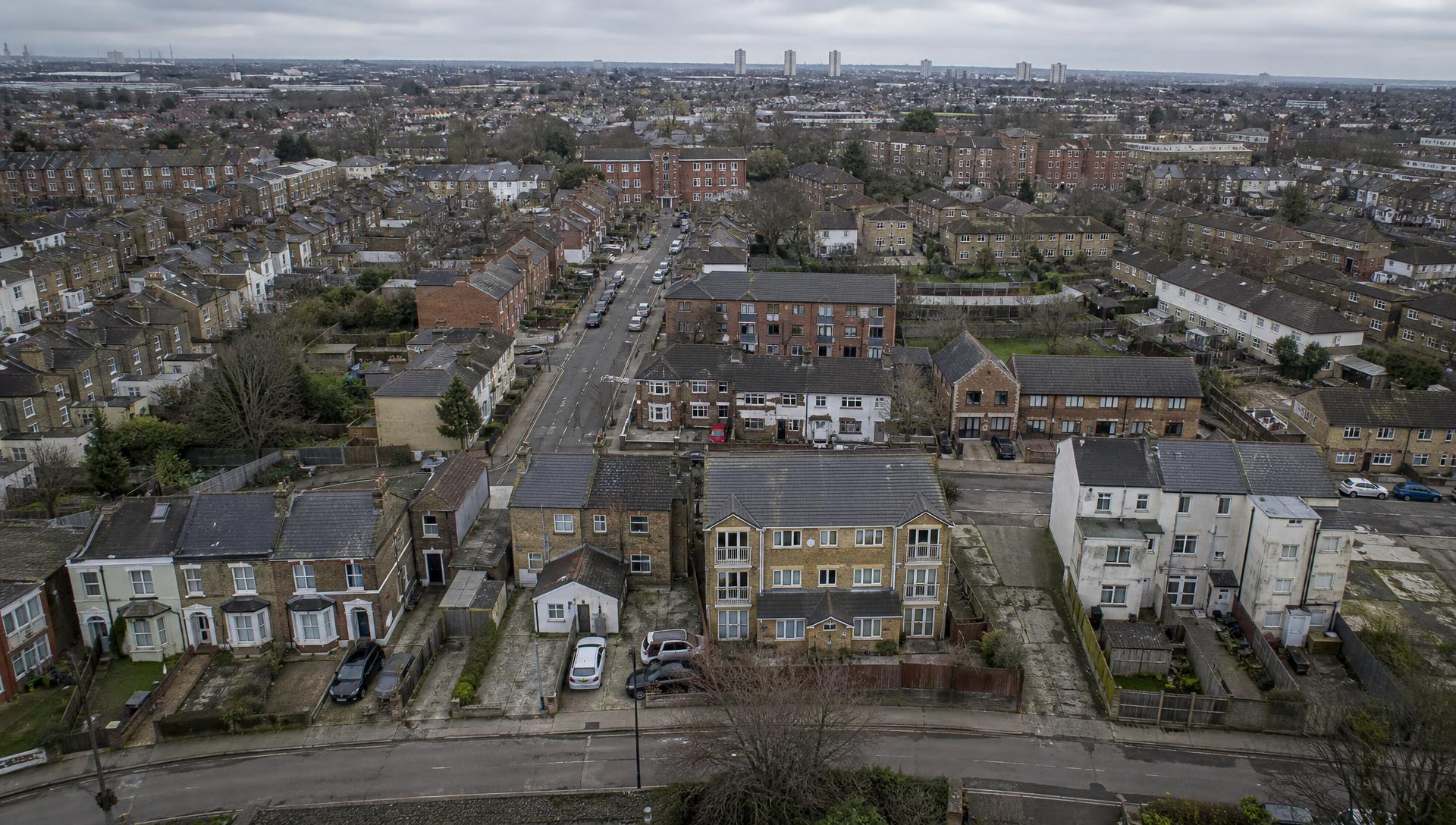
Recent analysis from the British Geological Survey (BGS) has highlighted a growing climate threat that receives far less attention than flooding: subsidence. According to new projections, more than 1.8 million properties across Great Britain could be vulnerable to climate-related subsidence by 2070, with London, Essex and Kent among the most exposed areas.
For decades, flood risk has dominated conversations around climate resilience in the built environment. Yet as hotter, drier summers become more frequent, another form of climate risk is emerging beneath our feet.
Why Climate Change Is Increasing Subsidence Risk
Much of southern and eastern England is underlain by clay-rich soils, which expand when wet and contract as they dry. Rising temperatures and prolonged dry periods remove moisture from the ground, potentially causing movement beneath building foundations. This process, known as clay shrink-swell, is expected to intensify over the coming decades.
The latest BGS analysis combines geological conditions with future climate projections to identify areas where this risk is expected to increase most significantly. The highest concentrations are found across London and the South East, where many homes were built during periods when future climate conditions were not fully understood.
This is Not Only a UK Problem
Subsidence is also a growing concern elsewhere in Europe. For example in France, drought is causing clay-rich soils to shrink and subsequently expand when rainfall returns. Approximately 48% of mainland France is classified as having medium or high exposure to clay shrink–swell, potentially affecting more than 10 million homes. The risk is becoming more severe as climate change increases the frequency of prolonged droughts and extreme heat. France’s 2022 drought illustrates the potential financial impact, generating several billion euros in related insurance claims. Although exposure varies between regions and buildings, the French experience shows that climate-driven ground movement is already affecting property owners, insurers and the wider housing market across Europe.
The Financial Effects Extend Beyond Repair Costs
The financial consequences are already visible. UK insurers reported £153 million in subsidence-related claims during the first half of 2025, following an exceptionally warm and sunny spring.
A Growing Challenge for Lenders and Housing Providers
Climate risk is increasingly influencing lending decisions, property valuations and portfolio management. As climate conditions evolve, historic performance may no longer be a reliable guide to future risk.
Properties that have never experienced subsidence could become increasingly vulnerable over the lifespan of a mortgage or investment. The BGS warns that foundations which are currently stable may experience greater movement as rainfall and temperature patterns change.
From Awareness to Action
Subsidence illustrates how climate change can reshape property risk gradually and remain unnoticed until damage appears. For the property sector, the priority is to move beyond a snapshot of present-day hazards and understand how exposure could develop over the coming decades.
At SkenarioLabs, we believe climate resilience starts with better data. By combining climate projections, environmental risk intelligence and property-level analysis, organisations can identify emerging vulnerabilities earlier and make more informed decisions.
Because when it comes to climate risk, the most important changes are not always the ones we can see. Sometimes they are happening beneath the foundations.